

You should hire a licensed electrician to install a ceiling fan whenever the job involves new wiring, an unrated electrical box, or a separate switch for the fan and light. A straightforward electrician install ceiling fan job typically costs $100–$650 depending on whether new wiring is needed, and takes 45 minutes to 5 hours. For anything beyond a simple fan-to-fan swap, a licensed electrician is the safest and most code-compliant choice.
Ceiling fans feel like a simple swap pull the old one down, hang the new one, done. Then the box in the ceiling turns out to be rated for a light fixture, not 15+ pounds of spinning fan, there’s no neutral wire where you expected one, or the switch loop doesn’t do what the fan’s remote needs it to do. That’s the moment most homeowners realize this isn’t a weekend project with a stepladder and a screwdriver it’s an electrical job, and it deserves to be treated like one.
If you’ve searched for electrician install ceiling fan because you’re weighing DIY against calling a pro, or because you just want to know what it actually costs and how long it takes, this guide walks through every angle: safety, wiring, cost, timeline, what separates a good installer from a risky one, and the questions Bakersfield homeowners ask most.
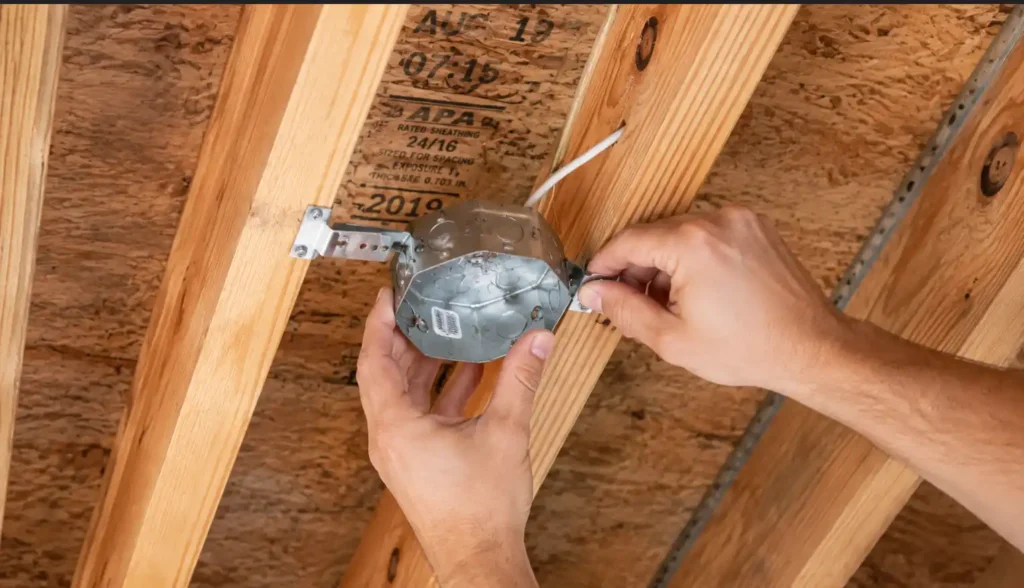
Why Ceiling Fan Installation Isn’t a Simple DIY Task
Most people underestimate this job because a ceiling fan looks like a lighting fixture with extra parts. In reality, three things separate it from hanging a light:
- Weight and motion. A running ceiling fan creates constant vibration and torque. A standard “pancake” light box, especially one just screwed into drywall or a single joist nail, isn’t built to hold that load. Over months of use, it can pull loose sometimes without any obvious warning until the fan starts to sag or wobble violently.
- Wiring complexity. Many fans need a separate switch for the light and the fan motor, which means running an additional conductor through the switch loop. Homes built before the 1980s, common throughout older Bakersfield neighborhoods, often lack a neutral wire at the switch box, which some smart and remote-controlled fans require.
- Code compliance. The National Electrical Code requires listed, fan-rated boxes for any ceiling-suspended fan. Using the wrong box isn’t just a technicality it’s the difference between a fan that stays put and one that eventually fails.
This is exactly why so many homeowners who start the project themselves end up calling a professional halfway through. If you’re already noticing your ceiling box feels flimsy, the switch does something unexpected, or your home is older with outdated wiring, it’s worth reading our related post on home rewiring warning signs before you go further catching these issues early can save you from a much bigger repair bill later.
What Homeowners Actually Worry About
Before diving into cost and process, it helps to name the real concerns driving this search, because most articles skip straight to instructions without addressing them:
- “Will I get shocked or start a fire if I do this myself?” Reasonable fear improper wiring is a leading cause of residential electrical fires, and ceiling boxes are one of the more common failure points.
- “Is this actually a job for an electrician, or can a handyman do it?” It depends on your existing wiring. A straight fan-for-fan swap with existing fan-rated boxes is often within a skilled handyman’s scope. New wiring, a new switch leg, or an aging panel means you want a licensed electrician.
- “What if the fan wobbles or the lights flicker afterward?” This usually points to an unbalanced blade, a loose mounting bracket, or more seriously a wiring or connection issue that wasn’t torqued down properly.
- “How much is this going to cost me, and are there hidden fees?” Almost every homeowner’s biggest frustration is a quote that balloons once the electrician opens the ceiling and finds a problem.
Addressing each of these honestly is what separates a trustworthy contractor from one who just wants the job.
When You Genuinely Need an Electrician Install Ceiling Fan Service
Not every fan installation requires a licensed professional, but several situations make it non-negotiable:
- There’s no existing electrical box in the ceiling where you want the fan
- Your home has aluminum wiring or wiring older than 30 years
- You’re adding a fan to a room with no prior fixture (new circuit run required)
- The fan requires a dedicated switch leg for separate light/fan control
- You’re installing a fan on a vaulted or high ceiling requiring an extension downrod and additional structural support
- You’ve noticed warm switch plates, flickering lights, or breakers tripping elsewhere in the home
If any of these apply, this becomes a licensed-electrician job rather than a handyman task both for safety and because most manufacturer warranties require code-compliant installation
Cost to Have an Electrician Install Ceiling Fan in Bakersfield
Pricing varies based on whether you already have a compatible box and wiring, or whether new electrical work is needed. Here’s a realistic breakdown:
| Scope of Work | Typical Cost Range | Time on Site |
| Swap existing fan (fan-rated box already in place) | $100 – $200 | 45 min – 1.5 hrs |
| Replace light fixture with new fan (box upgrade needed) | $200 – $400 | 1.5 – 3 hrs |
| New fan install, no existing box (new wiring/switch run) | $350 – $650+ | 3 – 5 hrs |
| High/vaulted ceiling with extension downrod | $250 – $500 (added to base cost) | +1 – 2 hrs |
| Smart/remote-control fan with separate switch leg | $300 – $550 | 2 – 4 hrs |
| Multiple fan installation (per additional fan) | $75 – $150 discount per unit | Varies |
These figures reflect general Bakersfield-area market pricing for licensed residential electrical work, not a fixed quote. Older homes, attic access difficulty, and panel condition can all shift the final number. A trustworthy electrician will inspect the ceiling box and wiring before finalizing a price rather than quoting blind over the phone.
If your home’s overall electrical system is aging alongside that ceiling box, it’s often worth a broader look our electrical panel inspection service can flag capacity or safety issues while the electrician is already on site.
Related Article you must read : Electrical Panel Upgrade Cost: What Bakersfield Homeowners Should Expect to Pay
The Ceiling Fan Installation Process, Step by Step
Understanding the actual workflow helps you evaluate whether a contractor is cutting corners.
1. Power Shutoff and Safety Check
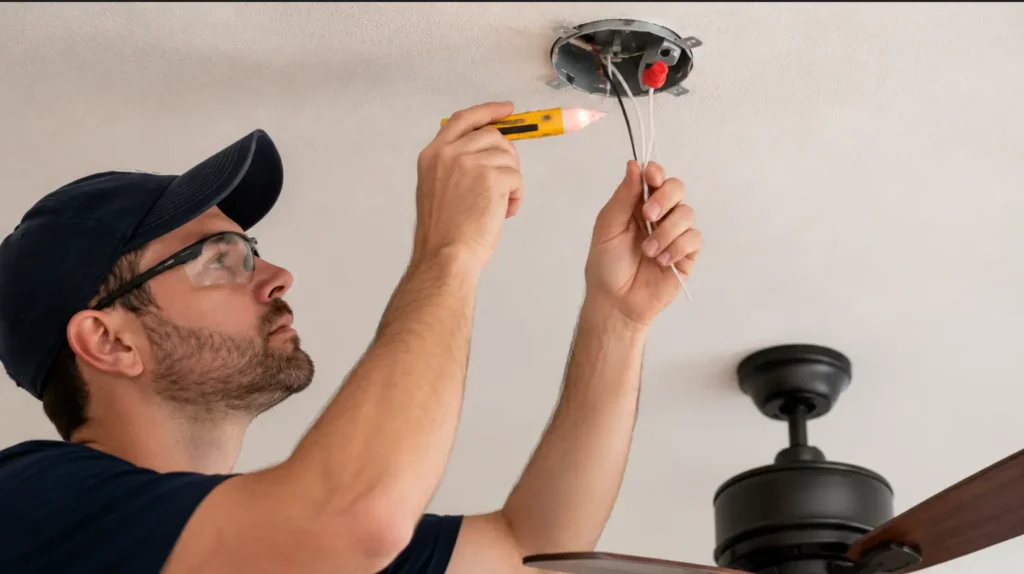
The circuit is shut off at the breaker, and the electrician verifies zero voltage at the ceiling box with a tester before touching any wires never skip this step, even for a “simple” swap.
2. Box Inspection or Replacement
The existing box is checked for a fan rating and secure mounting. If it’s not rated for fan use, it gets replaced with a properly braced, listed fan box this is the single most important safety step in the entire job.
3. Structural Support Verification
For heavier fans or vaulted ceilings, additional blocking between joists or a brace bar may be added so the box can handle dynamic load, not just static weight.
4. Wiring and Switch Configuration
Wires are connected according to the fan’s wiring diagram hot, neutral, ground, and (if applicable) a separate switch leg for independent light/fan control. Connections are secured with proper wire nuts and torqued down, not just twisted.
5. Mounting and Balancing
The fan is hung on its bracket, blades attached, and balanced to eliminate wobble an often-skipped step that’s the reason many DIY installs shake or hum over time.
6. Testing on Every Speed and Function
A professional install always ends with testing the fan on low, medium, and high speeds, the light kit, and the remote or wall control, confirming everything runs cleanly before calling the job done.
Related Article You Must Know : How to Install a Ceiling Fan Without Existing Wiring: The Complete Bakersfield Homeowner’s Guide
DIY vs. Hiring an Electrician: An Honest Comparison
| Factor | DIY Installation | Licensed Electrician Install Ceiling Fan |
| Upfront cost | Lower (tools + fan only) | Moderate labor cost added |
| Safety risk | Higher shock, fire, or fall risk | Minimal code-compliant, insured work |
| Code compliance | Often overlooked | Verified and guaranteed |
| Warranty protection | May void manufacturer warranty | Typically preserves warranty |
| Time investment | 2–5+ hours, often with troubleshooting | 1–3 hours, completed same visit |
| Handles hidden wiring issues | No | Yes diagnosed and resolved on the spot |
| Long-term reliability | Variable | High, when installed to code |
For a straightforward swap with an already-rated box, a confident DIYer can often manage it safely. For anything involving new wiring, an unrated box, or an unfamiliar switch configuration, the cost difference is small compared to the risk of a house fire or a fan that eventually falls.
Signs Your Current Ceiling Fan Needs Professional Attention
Even fans installed years ago can develop problems worth having a licensed electrician look at:
- Noticeable wobble that worsens over time, even after balancing the blades
- Buzzing, humming, or clicking sounds from the motor housing
- Lights on the fan flickering independently of the rest of the room
- The fan feels loose or shifts slightly when touched
- A burning smell or discoloration around the mounting canopy
Any of these can indicate a failing box, a loose electrical connection, or motor wear all reasons to have it inspected rather than ignored.
Choosing the Right Fan for Your Space
A professional installer can also guide fan selection, which matters more than most homeowners expect:
- Room size: A fan under 42″ suits small bedrooms and offices; 44–50″ fits most living rooms; 52″+ works for great rooms and larger spaces.
- Ceiling height: Standard 8-foot ceilings need a flush-mount or low-profile fan; higher ceilings benefit from a downrod for proper airflow.
- Outdoor or covered patio use: Requires a wet-rated or damp-rated fan, not a standard indoor unit — a distinction many big-box store buyers miss.
- Smart features: Wi-Fi and remote-controlled fans often need a neutral wire at the switch, which is worth confirming before purchase, not after.
If you’re outfitting more than one room, our whole-home lighting and fan upgrade service bundles multiple installs into a single visit, which typically saves on total labor cost.
Frequently Asked Questions
Do I need a licensed electrician to install a ceiling fan?
Not always. If you’re replacing an existing fan on an already fan-rated box with no wiring changes, a skilled handyman can often do it. If new wiring, a new switch leg, or an unrated box is involved, a licensed electrician is strongly recommended and, in many cases, required by code.
How long does it take an electrician to install a ceiling fan?
A standard swap takes about 45 minutes to 1.5 hours. Installing a fan where none existed before, including running new wiring, typically takes 3 to 5 hours.
Can any ceiling box hold a ceiling fan?
No. Only boxes specifically listed and rated for fan support should be used. A standard light fixture box can fail under a fan’s weight and vibration over time.
Why does my new ceiling fan wobble?
Wobble is usually caused by an unbalanced blade, a loose mounting bracket, or the box itself not being securely fastened to structural framing. A licensed electrician can diagnose which of these is the cause.
What does it cost to have an electrician install a ceiling fan in Bakersfield?
Most straightforward installations run between $100 and $400, while jobs requiring new wiring or box replacement can run $350 to $650 or more, depending on ceiling height and switch configuration.
Can I install a ceiling fan where a light fixture used to be?
Sometimes, but the existing box must be swapped for a fan-rated one first this is one of the most common code violations found in DIY installs.
Getting It Done Right the First Time
A ceiling fan installation looks small on paper, but it touches wiring, structural support, and code compliance all at once which is exactly why it’s worth getting right the first time rather than troubleshooting a wobble or a warm switch plate six months from now. Whether you need a single fan swapped or a full room wired for one from scratch, having a licensed electrician install ceiling fan units means the box, the wiring, and the balance are all handled to code in one visit. If your home is due for a broader safety check, To Contact our team is the fastest way to get a straight answer and an upfront quote before any work begins.