

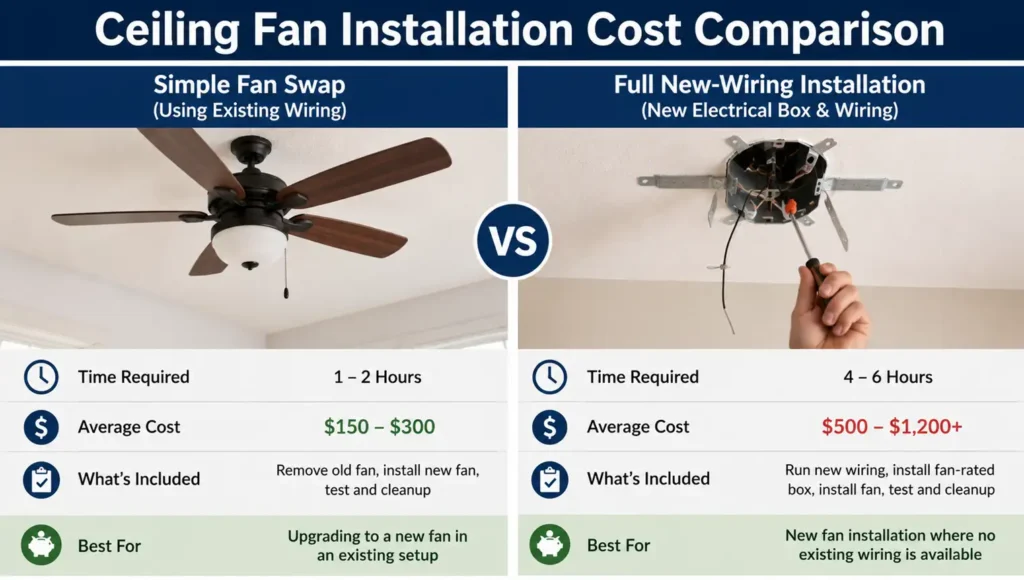
The average ceiling fan installation cost is $150 to $350 for a standard installation with existing wiring and a fan-rated electrical box. If new wiring, a new electrical box, or structural support is required, the total cost can range from $350 to $700 or more. Final pricing depends on the electrical setup, ceiling height, wiring requirements, and installation complexity.
What Actually Determines Ceiling Fan Installation Cost
Every homeowner’s situation is different, and that’s exactly why two neighbors on the same street can get quotes that are $300 apart. Here’s what actually drives the price up or down.
1. Does the Room Already Have Electrical Wiring?
This is the single biggest factor. If a ceiling light fixture already exists where you want the fan, an electrician can often swap it out in under two hours. If there’s no wiring at all, the job requires running new circuit wiring from the panel or a nearby junction box, which means more labor, possibly drywall repair, and sometimes a permit.
Related Post: How to Install a Ceiling Fan Without Existing Wiring: The Complete Bakersfield Homeowner’s Guide
2. Ceiling Height and Access
Standard 8-foot ceilings are the easiest and cheapest to work with. Vaulted, cathedral, or exceptionally high ceilings require extension downrods, extra ladder or lift equipment, and more careful balancing all of which add to labor time and, therefore, cost.
3. Structural Support Needs
Ceiling fans are heavier and create more vibration than a standard light fixture. Older homes often have electrical boxes rated only for lighting, not for the dynamic load of a spinning fan. In these cases, your electrician will need to install a fan-rated brace or box, which typically adds $50–$150 to the job.
4. Number of Fans Installed
Multi-room installs are more cost-effective per fan. Many Bakersfield electricians offer a discount on labor when installing three or more fans in a single visit, since setup and travel time are shared across the job.
5. Wiring Complexity for Wall Switches or Smart Controls
If you want a wall-mounted fan/light control, a smart switch, or app-based automation, expect additional wiring and configuration time. This is a smaller cost, usually $50–$150, but it’s a common add-on people forget to budget for.
6. Fan Type and Features
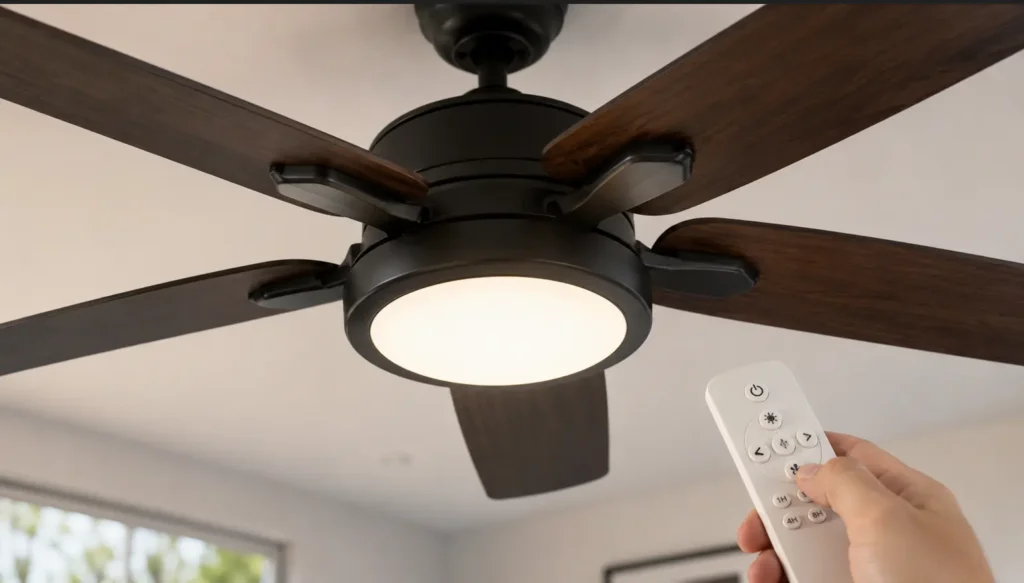
A basic three-blade fan with a pull chain costs less to purchase and install than a fan with integrated LED lighting, a remote control receiver, or smart-home connectivity, since those features require additional wiring inside the fan housing itself.
ceiling fan install cost Breakdown Table
| Installation Scenario | Average Labor Cost | Additional Materials | Total Estimated Cost |
| Replacing an existing light fixture with a fan (wiring already present) | $100 – $200 | $20 – $50 (mounting bracket) | $150 – $300 |
| New fan install with existing ceiling box, no rewiring needed | $150 – $250 | $30 – $60 | $200 – $350 |
| New fan install requiring a fan-rated support box | $200 – $350 | $50 – $150 | $300 – $450 |
| New wiring run from panel or junction box (no prior fixture) | $350 – $600 | $100 – $250 | $500 – $850 |
| High ceiling / vaulted ceiling with extension downrod | $250 – $450 | $50 – $150 (downrod, brace) | $350 – $600 |
| Smart fan with app/remote control and wall switch wiring | $200 – $350 | $50 – $150 | $300 – $500 |
| Multiple fans installed same visit (per fan, 3+) | $100 – $180 each | $30 – $60 each | $150 – $250 each |
Prices reflect typical ranges for Bakersfield and Kern County service calls and can vary based on the specific electrician, ceiling condition, and fan model chosen.
Can I Install a Ceiling Fan Myself?
This is one of the most searched questions on the topic, and the honest answer is: it depends heavily on your specific setup and comfort level with electrical work.
If you already have a ceiling fixture with working wiring, and you’re comfortable turning off a breaker, using a voltage tester, and following a manufacturer’s wiring diagram, a straightforward fan swap is within reach for a moderately handy homeowner. Most fan kits include clear instructions, and the process usually takes 1–3 hours.
However, several situations should send you straight to a licensed electrician instead:
- No existing ceiling box, or the box isn’t rated for fan weight and vibration
- Ceilings higher than 10 feet or vaulted ceiling angles
- Any sign of aluminum wiring, knob-and-tube wiring, or outdated wiring common in older Bakersfield and Oildale homes
- You want to add a new wall switch or run new circuitry
- Your home’s electrical panel is already older or shows signs of overload (frequent tripped breakers)
- You want the work to meet current code for resale or insurance purposes
Improperly installed ceiling fans are a documented fire and injury risk the Electrical Safety Foundation International has published guidance specifically warning that fans mounted on standard light fixture boxes, not fan-rated boxes, can eventually fall due to the added weight and constant vibration. That’s not a risk worth taking to save $150–$200 in labor.
If you’re weighing DIY against hiring a pro for any part of your home’s electrical work, our residential electrician services walks through exactly what our team handles for Bakersfield homeowners, from small fixture swaps to full rewiring.
Realted Article : Electrician Install Ceiling Fan: The Complete Bakersfield Homeowner’s Guide
DIY vs. Professional Installation: Side-by-Side Comparison
| Factor | DIY Installation | Professional Installation |
| Upfront cost | Fan cost only ($50–$500) | Fan cost + labor ($150–$700+) |
| Time investment | 1–4 hours (plus troubleshooting) | Typically completed in one visit |
| Electrical safety | Depends entirely on your skill level | Code-compliant, tested, insured work |
| Warranty protection | May void fan manufacturer warranty if misinstalled | Often preserves warranty; some electricians offer labor warranties |
| Permit/inspection needs | Usually skipped (not recommended for new wiring) | Handled properly when new wiring is involved |
| Risk level | Higher if wiring, bracing, or breaker work is involved | Minimal — licensed and insured technician |
| Best for | Simple swaps with existing, safe wiring | New installs, older homes, high ceilings, smart fans |
Signs You Need New Wiring Before Installing a Ceiling Fan
A lot of Bakersfield homes particularly in older parts of Oildale and central Bakersfield were built with electrical systems that weren’t designed with modern loads in mind. Before installing any fan, watch for:
- Flickering lights when other appliances turn on
- A ceiling box that feels loose or isn’t securely anchored to a joist
- Warm or discolored outlets/switches nearby
- A breaker panel that’s still using fuses or is more than 25 years old
- No ground wire present in the existing ceiling box
Any of these are reasons to have an electrician inspect the circuit before mounting anything overhead. If your home also needs broader electrical upgrades, it’s worth reading about our whole-home rewiring and wiring repair work, since fan installation is often just one piece of a larger electrical health check.
Ceiling Fans and Energy Efficiency: The Cost You Don’t See on the Invoice
Beyond the upfront cost to install ceiling fan, fans pay for themselves over time. According to the U.S. Department of Energy’s guidance on cooling and ventilation, ceiling fans allow homeowners to raise their thermostat setting by about 4°F with no reduction in comfort, since the moving air creates a wind-chill effect on skin. In a Bakersfield summer, that can translate into a noticeable reduction in air conditioning run-time and cost across the season.
Pairing a new fan installation with updated lighting in the same room is also a smart move for both energy savings and resale appeal LED-integrated fans combine two upgrades into one visit. If you’re already looking at fixtures throughout your home, our lighting installation and upgrade services cover both indoor fixtures and ceiling fan/light combos in a single project.
Common Mistakes That Drive Up Ceiling Fan Installation Cost
Homeowners frequently run into avoidable expenses because of a few recurring mistakes:
- Buying the fan before confirming ceiling box compatibility — leads to return trips or upgraded bracing mid-project
- Choosing a fan too large or too small for the room — inefficient airflow and possible need to purchase a second unit
- Ignoring downrod length for vaulted ceilings — fans mounted too close to angled ceilings perform poorly and may need adjustment
- Skipping a licensed electrician for older homes — hidden wiring issues discovered mid-DIY-project often cost more to fix after the fact than they would have if identified upfront
- Not asking about same-visit multi-fan pricing — installing fans room-by-room over separate visits costs more than bundling the work
How Long Does Ceiling Fan Installation Take?
For most straightforward swaps with existing wiring, installation takes 1 to 2 hours per fan. Jobs requiring new wiring, a fan-rated support box, or drywall work can take 3 to 5 hours. Multi-fan installations in one visit are typically faster per unit since the electrician is already set up and on-site.
When to Call an Electrician Immediately
Some situations aren’t worth waiting on. If you notice sparking, a burning smell, or a ceiling fan that wobbles severely or has come loose from the ceiling, that’s an active safety hazard. Bakersfield homeowners dealing with an urgent situation like this shouldn’t wait for a standard appointment
FAQs
How much does it cost to install a ceiling fan in an existing home? For a home with an existing, properly wired ceiling box, most homeowners pay between $150 and $350 in labor, plus the cost of the fan itself.
Is it cheaper to install a ceiling fan myself? Yes, upfront you save on labor. But if your home lacks proper wiring or a fan-rated box, DIY installation can lead to safety issues or damage that costs more to repair later than professional installation would have.
Can I install a ceiling fan myself if I already have a light fixture there? In many cases, yes, provided the existing box is fan-rated and the wiring is in good condition. If you’re unsure whether your box can support a fan, it’s worth a quick electrician consultation before starting.
Does installing a ceiling fan require a permit? Simple fixture swaps using existing wiring generally don’t require a permit. New circuit wiring or panel-related work typically does, depending on local Bakersfield and Kern County code requirements.
How much does it cost to install a ceiling fan with no existing wiring? Expect to pay between $350 and $700+, since this involves running new wiring, potentially opening drywall, and adding proper structural support for the fan.
Do ceiling fans actually lower cooling costs? Yes they don’t lower room temperature, but they create airflow that makes rooms feel cooler, allowing many households to raise their thermostat setting without losing comfort.
How do I know if my ceiling box can support a fan? Fan-rated boxes are marked accordingly, usually stamped with “fan rated” or a maximum weight capacity. If you can’t confirm this, a licensed electrician can check it in minutes.
Related Reading
If you’re budgeting for this project alongside other electrical work, you may also want to check our related post on what Bakersfield homeowners typically pay for general electrical service calls.
Related Blog Post: Hourly Rate Electrician: What Bakersfield Homeowners Actually Pay
Whether you’re swapping out an old fixture or starting from a bare ceiling, understanding what drives ceiling fan installation cost upfront helps you budget accurately and avoid surprise charges mid-project. Simple swaps are often DIY-friendly for confident homeowners, but anything involving new wiring, older electrical systems, or safety concerns is worth handing to a licensed professional.
For Bakersfield and Kern County homeowners ready to get a fan installed correctly the first time, our team handles everything from single-room installs to multi-fan whole-home projects. Visit our ceiling fan installation service page for details on what’s included, or reach out for a free, upfront estimate