

An hourly rate electrician typically charges between $50 and $150 per hour, with licensed electricians in California and Kern County usually falling in the $75–$150 range depending on licensing level, job complexity, and whether the work is scheduled or emergency service. This rate covers labor only materials, permits, and trip or diagnostic fees are usually billed separately. Electrical services rates shift based on the type of job, the time of day, the electrician’s licensing level, and even the neighborhood you live in. If you’ve ever gotten three quotes for the same repair and watched the numbers swing by $50 or more per hour, you already know pricing in this trade isn’t standardized the way, say, an oil change is.
This guide breaks down what actually drives an average electrician rates , what’s reasonable to expect in the Bakersfield and Kern County market, and how to tell the difference between a fair quote and one that’s padded. We’ll also cover flat-rate versus hourly pricing, emergency call-out fees, and the practical steps you can take to avoid overpaying.
What Is the Average Hourly Rate Electrician Charge?
Nationally, electricians typically bill somewhere between $50 and $130 per hour, though that range compresses or expands depending on region, licensing, and job complexity. In California, and specifically across Kern County, rates tend to sit on the higher end of that spectrum because of higher costs of doing business, insurance requirements, and continuing education mandates tied to state licensing.
Here’s a general breakdown of what shapes the number you’ll see on a quote:
| Factor | Typical Impact on Rate |
| Licensing level (apprentice, journeyman, master) | Master electricians bill 20–40% more than apprentices |
| Service type (routine vs. emergency) | Emergency and after-hours work often adds a premium |
| Job complexity | Panel upgrades and rewiring cost more per hour than outlet swaps |
| Property type | Commercial and industrial work usually carries higher rates than residential |
| Region/market | Urban and higher cost-of-living areas trend higher |
| Company overhead | Established firms with trucks, insurance, and warranties price accordingly |
A trip charge or diagnostic fee is also common and separate from the hourly labor rate. This typically covers the electrician’s drive time, initial inspection, and the cost of showing up even before any repair work starts.
Why Electrical Service Rates Aren’t One-Size-Fits-All
Two households calling for the exact same repair can get different quotes, and that’s not necessarily a red flag. Electrical rates depend heavily on what’s happening behind the wall. A flickering light might be a five-minute switch replacement, or it could be a symptom of a failing circuit that takes hours to trace and correct. Reputable contractors price based on what they find during inspection, not a blind guess over the phone.
This is one reason a transparent, licensed provider matters. For property owners across Kern County, working with an established residential electrician Bakersfield team means you’re getting a rate built around actual diagnostics rather than a rough estimate designed to get a foot in the door.
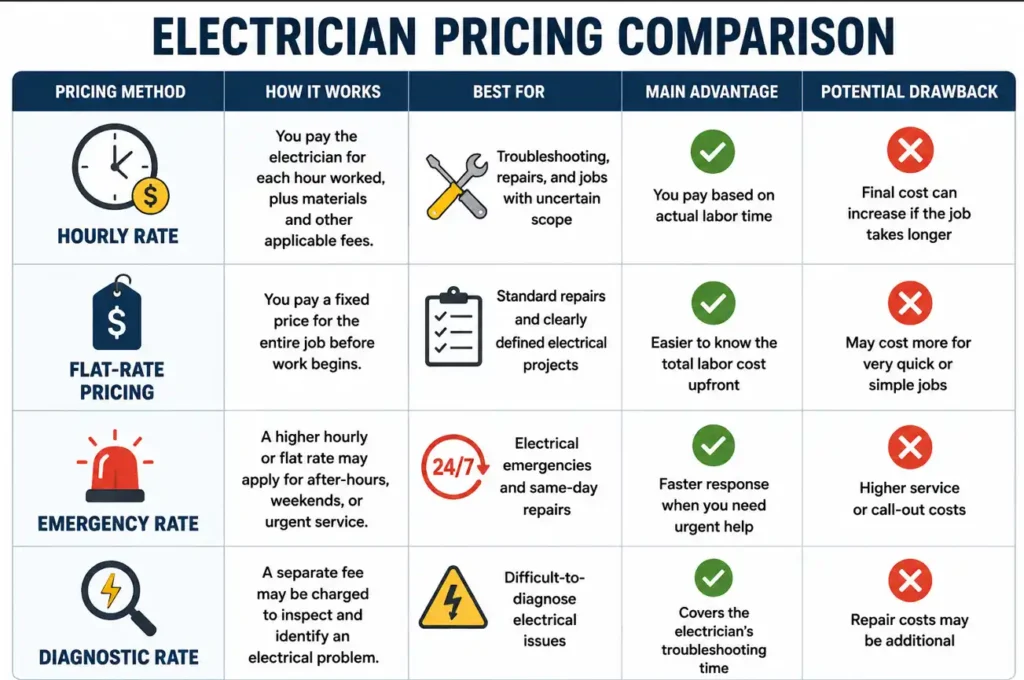
Hourly Rate vs. Flat-Rate Pricing: Which Is Better?
Most electricians offer one of two pricing structures, and understanding the difference helps you evaluate whether a quote is reasonable.
Hourly pricing charges you for the actual time spent on the job, plus materials. This works in your favor for quick, simple repairs, but it can feel unpredictable on jobs where the scope grows once walls are opened or wiring is inspected.
Flat-rate pricing gives you a fixed cost for a defined scope of work, agreed upon before the job starts. This is common for well-defined tasks like installing a ceiling fan, replacing a breaker, or upgrading a panel to a known specification.
| Pricing Model | Best For | Pros | Cons |
| Hourly Rate | Diagnostics, troubleshooting, unpredictable repairs | Pay only for time used | Final cost can vary |
| Flat Rate | Installations, upgrades, defined scope work | Predictable cost upfront | May include a margin for unknowns |
Many companies actually use a hybrid model: an hourly diagnostic fee to identify the problem, followed by a flat-rate quote once the scope is clear. That’s a fair and increasingly common approach, and it’s worth asking about directly when you request a quote.
What Drives Electrical Service Rates Up or Down
1. Licensing and Experience Level
A licensed master electrician has completed years of supervised work and passed state exams, and that expertise is reflected in the rate. Apprentices and journeymen typically bill less, but they’re often working under supervision on more complex jobs, which can offset the apparent savings. When you’re comparing quotes, it’s worth asking who will actually be performing the work.
2. Time of Day and Urgency
Standard business-hour rates are the baseline. Evening, weekend, and holiday calls almost always carry a premium, sometimes 1.5x to 2x the standard hourly rate electrician charge. If you’re dealing with exposed wiring, a burning smell, or a total power outage, that premium is usually worth paying rather than waiting. For situations that can’t wait, an emergency electrician who offers true 24-hour dispatch is the right call, even at a higher rate.
3. Job Type and Complexity
Simple tasks swapping an outlet, installing a dimmer switch, replacing a light fixture sit at the lower end of the hourly range because they require less diagnostic time and lower risk. Complex work, such as panel upgrades, whole-house rewiring, or industrial electrical troubleshooting, commands higher rates because of the specialized knowledge, code compliance requirements, and liability involved.
4. Property Type
Residential rates and commercial or industrial rates aren’t interchangeable. Commercial and industrial electrical work often involves three-phase power, larger equipment, and stricter compliance standards, all of which push hourly rates higher than a typical home service call.
5. Materials and Permits
Labor is only part of the invoice. Materials, permit fees (required for most panel upgrades and major rewiring in California), and disposal of old equipment all factor into the final bill. A transparent contractor itemizes these separately rather than folding them invisibly into the labor rate.
Sample Cost Ranges for Common Electrical Jobs
While every job is unique, these ranges reflect typical costs seen across the Bakersfield market for common residential electrical work, combining both labor and standard materials.
| Job Type | Typical Cost Range |
| Outlet or switch replacement | $100 – $250 |
| Ceiling fan installation | $150 – $450 |
| Circuit breaker replacement | $150 – $400 |
| GFCI outlet installation | $150 – $300 |
| Lighting installation (per fixture) | $100 – $350 |
| Panel upgrade (200-amp) | $1,800 – $4,500 |
| Whole-house rewiring | $4,000 – $15,000+ |
| Emergency after-hours call | $150 – $300 service fee, plus labor |
These figures are general planning estimates, not quotes. Actual pricing depends on your property’s wiring condition, panel age, and the scope determined during an on-site inspection. If you’re planning a lighting refresh or upgrade, a dedicated lighting installation provider can walk through fixture options and pricing specific to your space.
How to Read an Electrician’s Quote Without Getting Overcharged
Electrical pricing can feel opaque if you don’t know what to look for. Here’s a practical checklist to run through before you approve any work:
- Ask for a written estimate, not just a verbal number. This protects both you and the contractor if the scope changes.
- Clarify whether the quote is hourly or flat-rate, and whether materials are included or billed separately.
- Confirm licensing and insurance. A legitimate hourly rate electrician charge should come from someone who can produce a valid state license number on request.
- Ask about trip or diagnostic fees upfront, so there are no surprises on the invoice.
- Get the emergency rate in writing if you’re calling outside business hours some companies quote a low daytime rate but don’t disclose the after-hours multiplier until the bill arrives.
- Watch for vague line items like “miscellaneous labor” with no time breakdown. Reputable contractors itemize hours and materials clearly.
A company that’s upfront about pricing structure before stepping onto your property is generally a company that stands behind its work afterward. Providers offering upfront electrical estimates as a standard part of their process tend to have fewer billing disputes and better long-term customer relationships.
Red Flags in Electrical Pricing
- Quotes that are dramatically lower than every other bid (often a sign of unlicensed work or bait pricing)
- No written estimate before work begins
- Reluctance to explain how the hourly rate is calculated
- Pressure to approve major work on the spot without time to compare
- No mention of permits on jobs that legally require them, such as panel upgrades
Residential vs. Commercial vs. Industrial Electrical Rates
It’s worth understanding how rates shift across property types, since many homeowners assume a single “electrician rate” applies everywhere.
Residential rates are generally the most standardized, since home electrical systems follow fairly predictable code requirements. This is the segment most homeowners interact with for repairs, upgrades, and installations.
Commercial rates run higher due to code requirements around occupancy, fire safety, and business continuity. Downtime during business hours also factors into scheduling and pricing.
Industrial rates are typically the highest of the three, reflecting specialized equipment, three-phase power systems, and the higher stakes of facility downtime. Businesses relying on industrial electrical services for machinery wiring or power distribution should expect pricing structured around project scope rather than a simple hourly number.
Frequently Asked Questions
What is a fair hourly rate for an electrician?
A fair hourly rate for a licensed electrician generally falls between $75 and $150 in most California markets, depending on experience level and job type. Rates outside this range aren’t automatically unfair, but they should come with a clear explanation of what’s driving the difference.
Do electricians charge more on weekends?
Yes. Most electricians apply a premium for evening, weekend, and holiday calls, often 1.5x to 2x the standard rate, to account for after-hours availability and urgency.
Is it cheaper to get a flat-rate quote or pay hourly?
It depends on the job. Simple, well-defined tasks are often cheaper and more predictable at a flat rate. Diagnostic or unpredictable repairs may end up cheaper billed hourly, since you’re only paying for time actually spent.
Why do electrician rates vary so much between companies?
Rates vary based on licensing level, insurance coverage, company overhead, warranty offerings, and local market conditions. A lower quote isn’t always a better deal if it comes from an unlicensed or uninsured provider.
Does an electrician charge for a quote or estimate?
Many companies offer free estimates for standard jobs, while diagnostic visits for troubleshooting issues sometimes carry a trip or diagnostic fee. It’s reasonable to ask about this before scheduling.
How much does it cost to hire an electrician for a small job?
Small jobs like outlet repairs or switch replacements typically run $100–$250 total, factoring in both labor and materials, though this can vary based on accessibility and existing wiring condition.
Getting a Rate You Can Trust
Electrical pricing doesn’t have to be a mystery. The clearest path to a fair hourly rate electrician quote is working with a licensed, insured provider who explains their pricing structure before any tools come out, itemizes labor and materials separately, and stands behind the work with a real warranty. Whether it’s a routine repair, a planned upgrade, or an emergency that can’t wait, understanding what drives electrical service rates puts you in a much stronger position to evaluate any quote that lands in your inbox.
If you’re ready to get a transparent, no-surprise estimate for your property, reach out through the contact page to schedule an inspection and pricing breakdown specific to your job.