

A standard electrical panel upgrade cost ranges between $1,300 and $4,500 for most homes, depending on amperage, panel brand, wiring condition, and local permit fees. If your lights flicker every time the microwave kicks on, or you’ve lost count of how many times you’ve reset a breaker this month, that’s usually your panel telling you it can’t keep up with your home’s actual power demand and it’s a sign worth taking seriously before it turns into a bigger, more expensive problem.
This guide breaks down exactly what drives that cost up or down, the warning signs that tell you it’s time to stop putting an upgrade off, and what the entire process looks like from the first phone call to the final inspection so you’re working with real 2026 numbers instead of vague “it depends” answers or outdated estimates.
What Is an Electrical Panel Upgrade, Exactly?
Your electrical panel (also called a breaker box, load center, or service panel) is the control center for every circuit in your home. It takes incoming power from the utility line and distributes it safely across your outlets, appliances, HVAC system, and lighting. An upgrade means replacing that panel and often the main breaker and service entrance wiring with a unit that has more capacity, modern safety features, or both.
This isn’t the same as a simple breaker swap. A full panel upgrade typically involves:
- Removing the old panel enclosure
- Installing a new panel with higher amperage capacity
- Upgrading the main breaker
- Sometimes upgrading the service line from the utility connection
- Rewiring and relabeling circuits
- Permitting and inspection by the local building authority
Electrical Panel Upgrade Cost: The Real Numbers
Let’s get straight to what most people are actually searching for. Nationally, an electric panel upgrade cost typically falls between $1,300 and $4,500, though it can run higher depending on amperage, panel brand, and the complexity of your home’s existing wiring. In areas with older housing stock, like many neighborhoods here in Kern County, costs can lean toward the higher end because outdated wiring often needs correction at the same time.
Here’s a more detailed breakdown:
| Upgrade Type | Typical Cost Range | Notes |
| 100-amp to 150-amp panel | $1,300 – $2,500 | Common for smaller homes with modest power needs |
| 100-amp to 200-amp panel | $1,800 – $4,000 | The most common residential upgrade |
| 200-amp to 400-amp panel | $3,000 – $6,500+ | Needed for large homes, EV charging, or heavy appliance loads |
| Subpanel addition | $500 – $1,800 | Adds circuits without replacing the main panel |
| Full service upgrade (meter to panel) | $3,500 – $8,000+ | Includes utility connection and service line replacement |
A few factors that push the electric panel upgrade cost up or down on any given job:
- Amperage jump. Going from 60-amp to 200-amp service costs more than a modest 100-to-150-amp bump.
- Panel brand and quality. Mid-grade and premium panels (Square D, Siemens, Eaton) cost more upfront but tend to hold up better long-term.
- Permit and inspection fees. These vary by city and add anywhere from $100 to $500.
- Wiring condition. Homes with aluminum wiring, knob-and-tube wiring, or undersized circuits often need additional corrective work.
- Accessibility. A panel in a finished basement or tight interior closet takes longer to access and replace than one in a garage.
- Labor rates in your area. Local demand and licensing costs affect hourly rates, which is a big part of overall project cost. If you’re curious how labor pricing itself breaks down, our hourly electrician rate guide covers what Bakersfield homeowners are actually paying per hour. Related Post: Hourly Rate Electrician: What Bakersfield Homeowners Actually Pay
When to Upgrade Your Electrical Panel
A lot of homeowners wait until something fails before calling an electrician, but panels rarely fail without warning first. Knowing when to upgrade electrical panel equipment before it becomes a hazard can save you from a much more expensive repair or worse, an electrical fire.
Generally, you should consider an upgrade if:
- Your panel is more than 25–40 years old
- You’re adding a major appliance, EV charger, hot tub, or home addition
- You’re experiencing recurring breaker trips
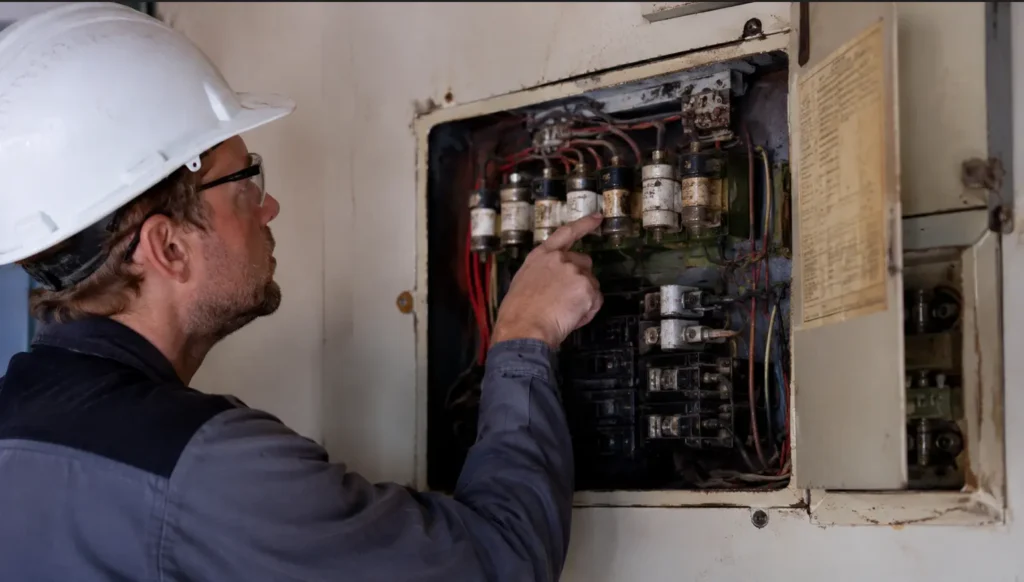
- Your home still uses fuses instead of breakers
- You’re planning a kitchen or laundry room remodel
- Your insurance company has flagged your panel type
- You’re installing solar panels and need updated interconnection capacity
If you’re weighing whether solar is part of your future plans, it’s worth noting that most solar installations require a panel evaluation first, since older equipment often can’t handle the added backfeed. Our solar panel installation team frequently coordinates panel upgrades as part of solar projects for exactly this reason. Internal Link Page: solar panel installation
Signs You Need an Electrical Panel Upgrade
This is the part most guides gloss over, but it matters. Recognizing the signs you need an electrical panel upgrade early is what separates a routine maintenance decision from an emergency call. Here are the most common symptoms we see in homes across Bakersfield and Kern County.
1. Frequent Breaker Trips
An occasional trip during a storm is normal. Breakers tripping weekly, or every time you run two appliances at once, is not. It usually means your panel can’t keep up with your home’s actual power demand.
2. Flickering or Dimming Lights
If lights dim when the AC compressor kicks on or flicker when you use the microwave, your panel or wiring may be struggling to distribute power evenly.
3. Warm or Discolored Panel Cover
A panel that’s warm to the touch, has a burning smell, or shows scorch marks near the breakers is a serious safety concern and should be addressed immediately, not scheduled for “someday.”
4. Fuse Box Instead of Breakers
If your home still has a fuse box, you’re working with technology from decades ago that simply wasn’t designed for modern electrical loads. This is one of the clearest signs you need an electrical panel upgrade, full stop.
5. Panel Rated Under 100 Amps
Most modern homes need at least 100 amps, and many need 150–200 amps to comfortably run central air, electric ranges, dryers, and electronics simultaneously.
6. Using Too Many Extension Cords or Power Strips
If you’re relying on power strips because you don’t have enough outlets or circuits, that’s a workaround for a capacity problem, not a real solution.
7. Difficulty Selling or Insuring the Home
Some insurers won’t cover homes with certain outdated panel brands (like older Federal Pacific or Zinsco panels) due to documented fire risk history. Buyers’ inspectors flag these too.
8. Buzzing Sounds From the Panel
Any audible buzzing, crackling, or humming coming from your panel indicates loose connections or arcing, both of which are fire hazards.
Reasons to Upgrade: Beyond Just Safety
While safety is the biggest driver, there are practical, financial, and lifestyle reasons homeowners choose to upgrade too:
- Adding an EV charger. Level 2 chargers typically need a dedicated 40–50 amp circuit, which older panels often can’t accommodate without an upgrade.
- Home additions or remodels. New square footage means new circuits, and most 100-amp panels are already near capacity before you add a room.
- Smart home and tech load. The average home today runs far more devices simultaneously than one built in the 1980s or 1990s ever anticipated.
- Resale value. A modern, code-compliant panel is a selling point, not just a maintenance item. Buyers and their inspectors notice.
- Lower long-term risk. According to the National Fire Protection Association, electrical failures and malfunctions are a leading cause of U.S. home fires each year, and outdated panels are a recurring factor in those incidents.
Electric Panel Upgradation Cost vs. Doing Nothing
It’s tempting to view a panel upgrade as an avoidable expense, but it helps to compare it against the actual cost of inaction:
| Factor | Cost of Upgrading | Cost of Delaying |
| Upfront cost | $1,300 – $6,500+ | $0 now, but rising later |
| Fire risk | Significantly reduced | Elevated, especially with fuse boxes or recalled panel brands |
| Insurance | Often easier to qualify or renew | Some insurers may deny or cancel coverage |
| Home value | Increases marketability | Can stall a sale or lower offers |
| Appliance compatibility | Full support for modern loads | Frequent trips, limited capacity |
| Emergency repair risk | Planned, controlled cost | Unplanned failure often costs more |
The Panel Upgrade Process, Step by Step
Homeowners often assume this is a same-day job. Sometimes it is, but a full service upgrade usually takes longer. Here’s what to expect:
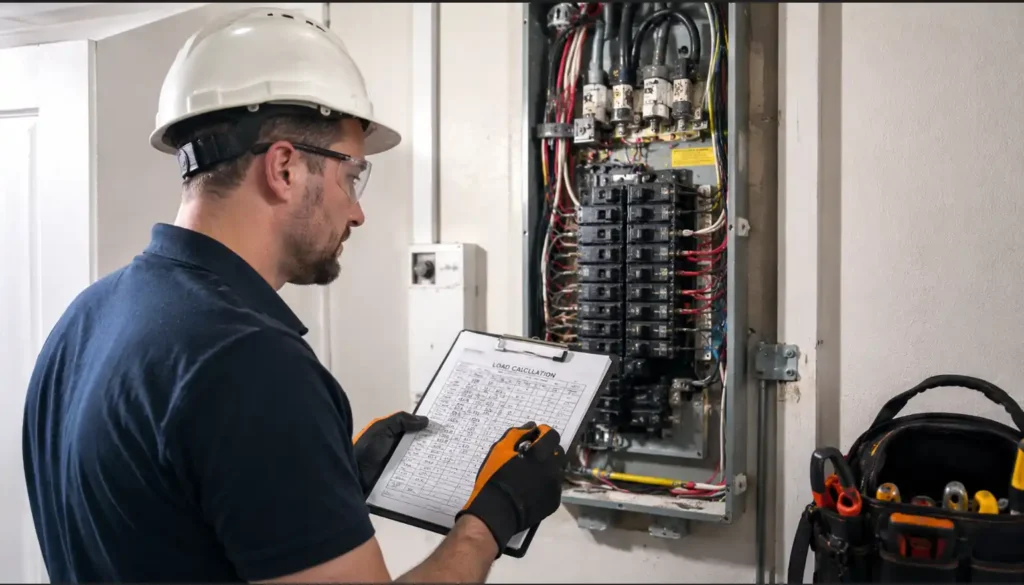
- Inspection and load calculation. An electrician evaluates your current panel, wiring condition, and total home electrical load.
- Permit application. Panel upgrades almost always require a permit from your local building department.
- Utility coordination. If the service line itself needs upgrading, your utility company may need to disconnect and reconnect power.
- Installation day. The old panel is removed, the new one installed, circuits reconnected and labeled, and grounding verified.
- Inspection. A local inspector confirms the work meets current electrical code before the panel is signed off.
- Final walkthrough. Your electrician should walk you through the new panel, explain the labeling, and confirm everything’s working properly.
Most straightforward upgrades take one full day. Jobs involving service line replacement or significant wiring corrections can take two to three days.
How to Choose the Right Amperage
This is one of the most common questions homeowners get wrong, either underbuying or overspending.
- 100 amps: Suitable for smaller homes without electric heating, EV charging, or heavy appliance loads.
- 150 amps: A reasonable middle ground for moderate-sized homes with standard appliances.
- 200 amps: The current standard for most new construction and larger renovated homes, especially with central AC, electric ranges, and multiple large appliances.
- 400 amps: Typically reserved for very large homes, homes with extensive solar and battery storage, or properties running significant workshop or accessory equipment.
A licensed electrician should always run a proper load calculation rather than guessing based on square footage alone. Guessing low means you’ll be back here again in a few years; guessing high means paying for capacity you’ll never use.
DIY vs. Professional Panel Upgrade
Let’s be direct about this one: panel upgrades are not a do-it-yourself project. This work involves the main service connection, which carries lethal voltage even when individual breakers are off. Beyond the safety risk, most jurisdictions require a licensed electrician and a permitted inspection for any panel replacement DIY work won’t pass inspection and can void your homeowner’s insurance if something goes wrong later.
If your home also needs broader electrical attention alongside the panel, it’s worth having a residential electrician evaluate the full system rather than treating the panel as an isolated fix. Internal Link Page: Residential Electrical Services
Frequently Asked Questions
How much does an electrical panel upgrade cost on average?
Most homeowners pay between $1,300 and $4,500 for a standard panel upgrade, with 200-amp upgrades on older homes sometimes running higher depending on wiring condition and permit fees.
How long does a panel upgrade take?
A standard upgrade takes about one full day. Jobs requiring a full service line replacement can take two to three days, including inspection scheduling.
Do I need a permit for an electrical panel upgrade?
Yes. Nearly every jurisdiction, including Bakersfield and Kern County, requires a permit and inspection for panel replacement work.
Can I upgrade my panel without upgrading my whole home’s wiring?
Often, yes. The panel and the branch wiring are separate systems, though very old or damaged wiring may need correction at the same time for safety and code compliance.
What amperage panel do I need?
Most modern homes need 150–200 amps. The right size depends on square footage, appliances, HVAC type, and whether you’re planning for EV charging or solar.
Will a panel upgrade lower my insurance costs?
It can. Some insurers offer better rates or renewal terms once outdated or recalled panel brands are replaced with modern, code-compliant equipment.
Is it worth upgrading an electrical panel before selling my home?
In most cases, yes. An outdated panel is a common red flag in home inspections and can slow down a sale or lead to buyer-requested price reductions.
Getting an Accurate Quote for Your Home
Every home’s wiring, age, and electrical demand is different, which is exactly why online calculators only get you so far. The most reliable way to know your actual electrical panel upgrade cost is a proper in-person load calculation and inspection. If you’re seeing any of the warning signs covered above, don’t wait for a tripped breaker to turn into something worse. Our team handles panel upgrades across Bakersfield and Kern County with upfront, honest pricing. Contat Our Team Now